

Polanco and Architecture
07 Sep 20265 minutes read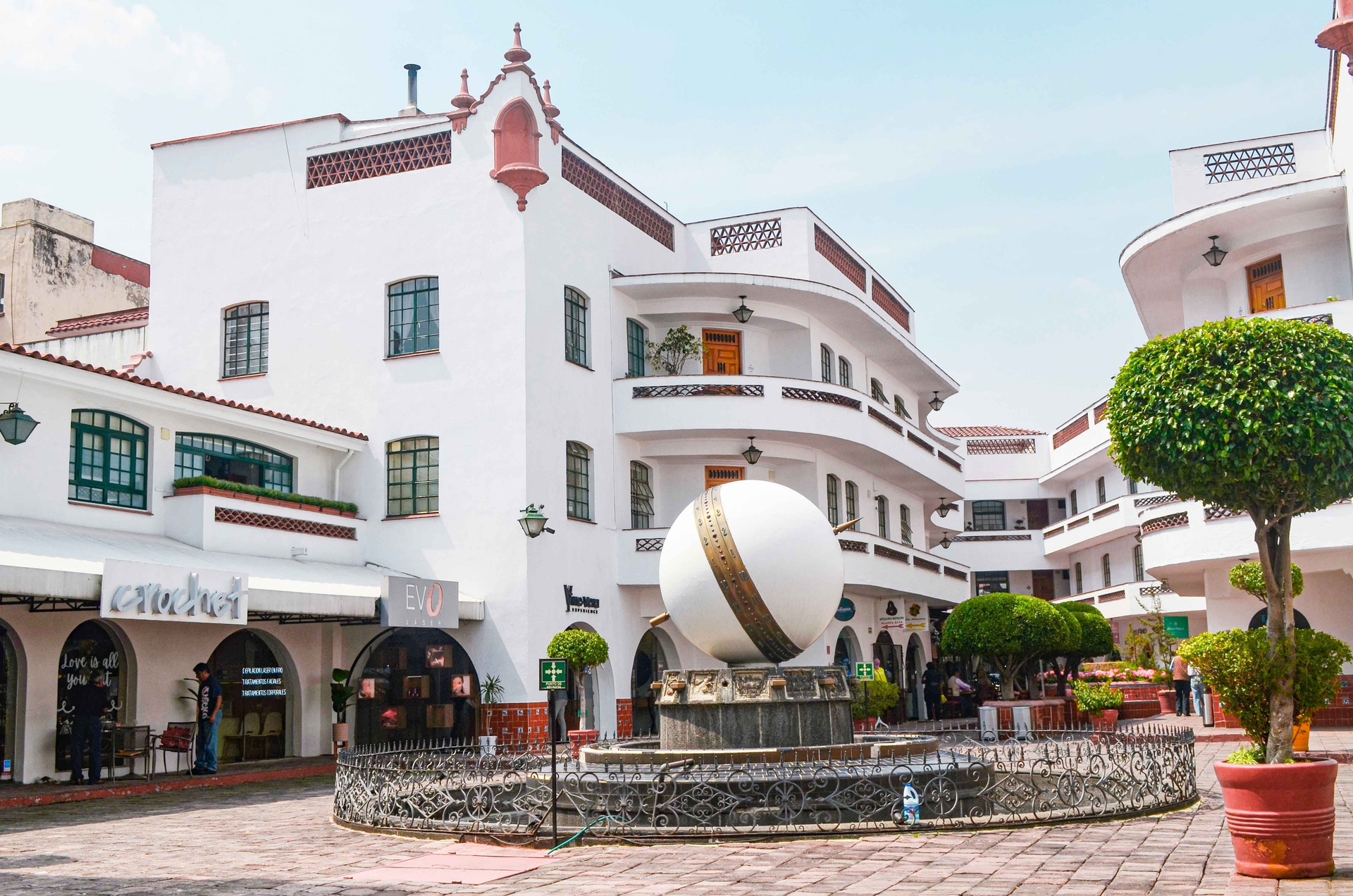
Polanco has always been at the forefront with its architecture, not only with offices and large corporate towers, but also with shopping centers, museums and galleries. It's no wonder this area is surrounded by emblematic buildings; however, it still retains colonial touches on facades, and some constructions from the 40s continue to survive in this city's urban landscape. For this reason, we've prepared a guide so you can visit some of the most emblematic constructions in this neighborhood.
Palacio de Hierro Polanco
This building has positioned itself as one of the most emblematic constructions in Polanco and one of the most important department stores in Mexico. Because of its construction that stands out among other buildings, it has been considered "The Palace of Palaces," and rightfully so, as its 11 levels encompass different points of the city through its decoration.
Palacio de Hierro came to life in 1997 and was designed by architect Sordo Madaleno. Over time, it has undergone various renovations, but its geometric structure remains impressive to this day.
Address: Av Moliere 222, Polanco, Polanco II Secc, Miguel Hidalgo, 11530 Mexico City, CDMX
Hotel Camino Real
Hotel Camino Real is synonymous with luxury and comfort, and is also one of the most important exponents of hotel architecture in Mexico. You don't need to be an expert to notice that this hotel brings the art of construction to its highest level.
Under the direction of architect Ricardo Legorreta, this venue has become a visual delight not only for its design, but also for the distribution of spaces and use of colors. It's worth mentioning Legorreta as one of the most talented architects of the 1960s. He always sought ways to capture Mexican art, whether through painting with vibrant colors like Mexican pink, through sculpture and architecture, presenting geometric figures and spaces full of light. You only need to see some of his constructions like Papalote Museo del Niño or the National School of Plastic Arts to see the colors of muralism reflected on walls and facades.
It's no wonder he was the first Mexican architect to receive the Imperial Prize for Arts in Japan, and thanks to his impressive designs, we can continue to preserve part of his legacy.
Sinagoga Maguen David
This cultural and religious venue is the perfect example of harmonious coexistence between different cultures in Polanco. Located on Calle Sócrates, this construction features 20th century architecture, with the Star of David being the most characteristic feature of this ceremonial center. An important fact to highlight about this synagogue is the involvement of sculptor and architect Mathias Goeritz in its stained glass windows.
While the most well-known works of German artist Goeritz are the Towers of Satélite or La Serpiente at the Museum of Modern Art, his collaboration on the synagogue and Mexican architecture in general are a clear example of the influence of various architectural currents; in this case, German Abstractionism merges with religion and gives us an impressive ceremonial venue.
Address: Calle Sócrates 371, Polanco, Polanco II Secc, Miguel Hidalgo, 11550 Mexico City, CDMX
Pasaje Polanco
This passage was one of the first shopping centers in this area. Its innovative design for the 1940s was unconventional, as the ground floor housed department stores and the second floor had apartments. At some point, it was considered the heart of Polanco, as its Californian style had never been implemented in Mexico before.
In the center of the shopping plaza, you can find a fountain designed by Mexican Francisco J. Serrano, which holds a sphere that simulates the sun.
Serrano was not only in charge of this project; some streets in Condesa, the Historic Center and the Faculty of Engineering at UNAM feature designs by this Mexican architect, who was a pioneer of Art Deco in Mexico.
Currently, this passage continues to operate with various restaurants, bakeries and cafes that you can visit while taking in the West Hollywood style that remains current, and which will undoubtedly become one of your favorite places.
Address: Anatole France 87, Polanco, Polanco III Secc, Miguel Hidalgo, 11550 Mexico City, CDMX
Winston Churchill's Restaurant
With almost 50 years of service, this restaurant closed its doors a couple of years ago. However, it's a venue we can still appreciate, as it's one of the oldest buildings in Polanco still standing. This house was one of the first residential-type mansions in the area, located between the limits of Chapultepec and Polanco.
Years have passed and some modifications have been made, but it continues to maintain its English-style decoration.
While Polanco is surrounded by styles, designs and colors, it is also infused with national and international architectural talent. The skill of different architects merges in this neighborhood and gives us some of the best constructions in Mexico City.
Related Publications

Find More Places to Stay in CDMX
Polanco
(60)
Condesa
(60)
Santa Fe
(60)
Zona Reforma
(60)
Roma
(60)
Juarez
(60)
1
2
3
© 2026 — KUKUN



© 2026 — KUKUN