

Transportation Tips in Mexico City
08 Sep 20268 minutes read
Mexico City's public transportation is full of options: trolleybus, metro, light train, ecobici, metrobús, minibus, combis, RTP and even taxis, mototaxis and bike taxis; plus other options that ensure you can move from one place to another without any trouble.
Every place you visit in Mexico's vibrant and lively capital has a way to access it that isn't necessarily the metro, although it's one of locals' favorites, so it's worth knowing all the options available to you.
Something you absolutely need to get around Mexico City is your Mobility Card, which lets you use almost all the city's public transportation. It gives you access to: Metro, Metrobús, Light Train, Trolleybus, ECOBICI, RTP (Bicentennial Circuit), Mexibús, Cablebús (coming soon)
The card is purchased once and costs 15 pesos, and can be bought in several places in Mexico City, one of the newest being the machines installed in different metro stations. So you just have to reload it and forget about looking for change to pay.
Trolleybus
The trolleybus is the oldest of all public transportation in the capital. It was the successor to the streetcars in 1951 and continues strong with now 8 lines and a fleet of 360 trolleys operating throughout Mexico City.
To reduce emissions, they created three Zero Emission Corridors: Central Axis, Axis 2–2A South and Axis 7–7A South, the latter also designed for bike use. Trolleybuses operate at an average interval of 4 minutes and cover long distances within Mexico City.
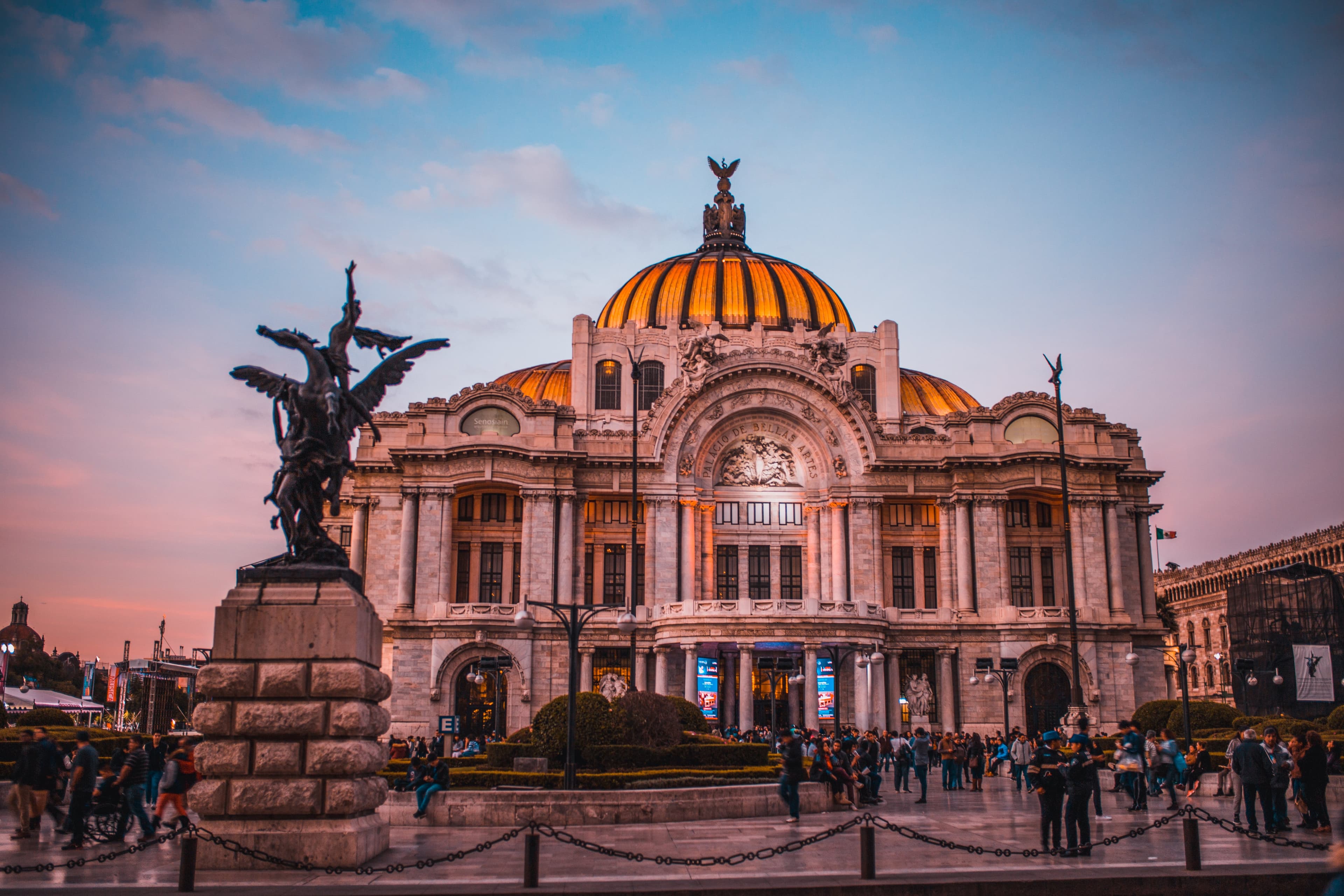
Tip: Mexico City residents prefer the trolleybus to reach certain places, like the Historic Center, as it passes next to the Palace of Fine Arts and to reach the Zócalo you can use the Madero pedestrian corridor.
Hours: They operate Monday to Saturday from 5:00 to 1:00, while on Sundays and holidays the schedule is from 5:30 to 0:00.
Cost: Travel on the Zero Emission Corridors is 4 pesos, while on other lines it's 2 pesos.
More info at: https://ste.cdmx.gob.mx/
Metro
The metro is another favorite public transportation in Mexico City. The network has 12 lines, with the newest running from Mixcoac to Tláhuac. It's the most used public transportation in Mexico City with 4.6 million users daily, and also has cars for women for user safety.
Tip: Avoid rush hours to avoid finding yourself packed in a car. If you're visiting, check which stations work for you and how you can mix it with other public transportation options.
Hours: It operates Monday to Friday from 5:00 to 0:00, Saturday from 6:00 to 0:00, and Sunday and holidays from 7:00 to 0:00.
Cost: A metro ticket costs 5 pesos or the same price with the Integrated Mobility Card, which will eventually completely replace tickets.
More Info: At metro.cdmx.gob.mx
Metrobús
Metrobús is a BRT (bus rapid transit) that started operating in Mexico in 2006.
Line 1 is the one that runs along the famous Insurgentes avenue, from Indios Verdes to El Caminero. It now has 7 lines and is in constant growth. One of the wonders is that several Metrobús and metro stations are close to each other, so that gives users a much larger range of movement.
If you're traveling to the city, you should know that there's a Metrobús that takes you from Terminal 1 of Mexico City airport to Terminal 2, and back. Plus there's a line that loops from the airport to the Historic Center; the first and this one share a stop, so make sure you're getting on the right one.
Tip: Like the metro, rush hours can be a bit crowded, so take that into account. Changing lines often means changing stations, however, with the Integrated Mobility Card you only pay once while making transfers.
Hours: It operates Monday to Saturday from 4:30 to 0:00, and Sunday and holidays from 5:00 to 0:00.
Cost: Metrobús only accepts the Integrated Mobility Card and a trip costs 6 pesos even with transfers, which require exiting and re-entering at different platforms.
More info: At metrobus.cdmx.gob.mx
Light Train
This public transportation is part of the Electrical Transportation Services network of Mexico City, and has 16 stations and 2 terminals running from Taxqueña to Xochimilco. There are 20 double trains coupled with dual control cabins and a maximum capacity of 374 passengers per unit.
Hours: It operates Monday to Friday from 5:00 to 0:00, Saturday from 6:00 to 0:00, and Sunday and holidays from 7:00 to 0:00.
Cost: A trip costs 3 pesos, whether you're going from terminal to terminal or want to get off at some stop.
More info: At ste.cdmx.gob.mx/tren-ligero
RTP
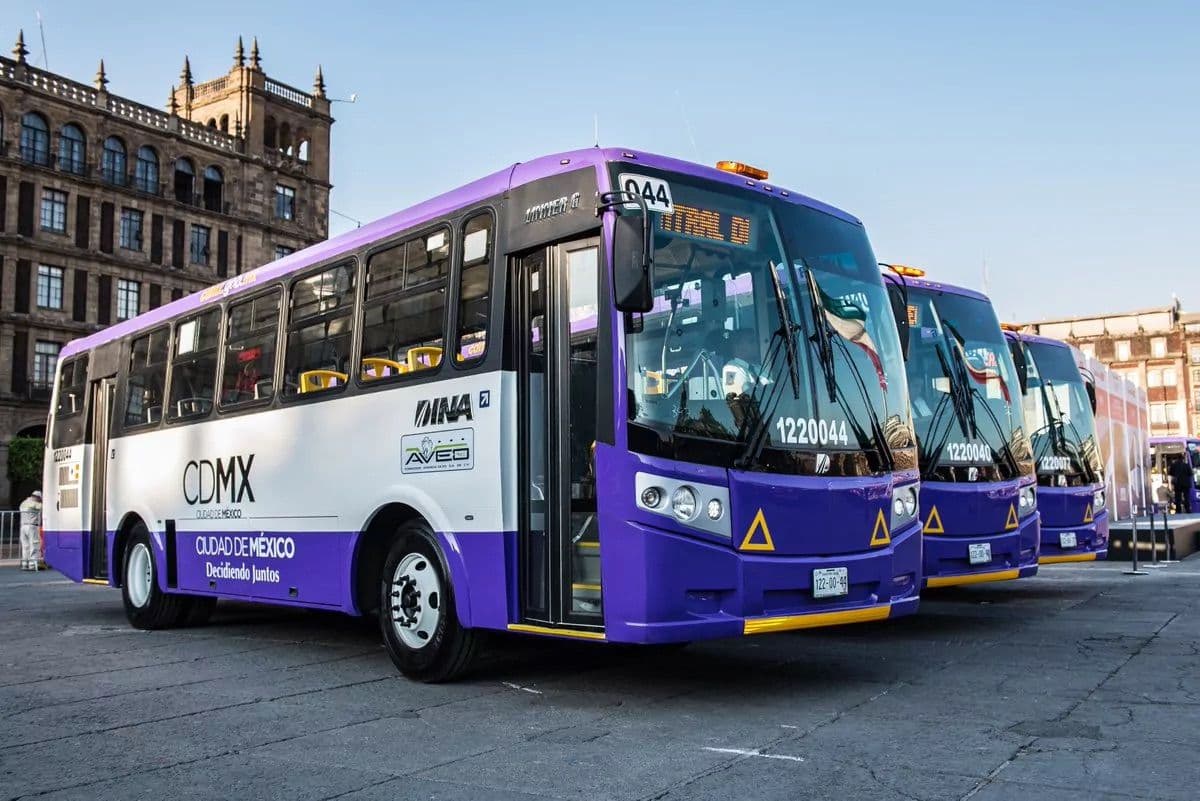
The RTP is also known as the Passenger Transportation Network of Mexico City, which refers to 103 bus routes, divided into 7 modules, that cover more places in the capital and will take you to those spaces where the metro, Metrobús, light train and trolleybus don't reach.
It's the cheapest public transportation in Mexico City and is divided into Ordinary, which covers all routes; Atenea, which serves only women to prevent gender violence; Express, which only has certain marked stops on its route for faster trips; Ecobús, which is less polluting, and Nightbus, which provides nighttime service.
Hours: They operate Monday to Saturday from 5:00 to 1:00, and Sunday and holidays from 5:30 to 0:00.
Cost: Ordinary and Atenea cost 2 pesos, Express costs 4 pesos, Ecobús costs 5 pesos, and Nightbus costs 7 pesos.
More info: At rtp.cdmx.gob.mx
ECOBICI
ECOBICI is Mexico City's public bike system. This means that with the same Integrated Mobility Card you can use this service, however, to have this public transportation available you need to activate it.
It has over 480 bike stations and more than 6,800 bicycles; 340 of them are part of the new electric bike system with pedal assistance that makes longer trips easier.
Tip: Remember you have two minutes to return the bike if it has problems before leaving the bike station. When returning it, look for a space with a green light, verify that you can no longer take it out and the button turns red, swipe your card through the reader and it should say the bike has been returned.
Hours: Bike stations operate Monday to Sunday from 5:00 to 0:30.
Cost: ECOBICI is divided into plans: 1-day pass, 108 pesos; 3-day pass, 261 pesos; 7-day pass, 360 pesos, and annual, 480 pesos. All plans include unlimited 45-minute trips at no cost. From 45 to 60 minutes an extra 14 pesos is charged, for each additional hour or fraction 43 pesos, usage over 24 hours is 5,999 pesos and card replacement is 15 pesos.
More info: At ecobici.cdmx.gob.mx
Minibuses and Combis
Despite having unreliable schedules and several details to solve, these Mexico City public transportation options continue to be the way millions of residents move around, normally from home to work and back.
The Mexico City Government has this map of available routes, which are about 2,300, although it's always better to know the route you need in advance to get to your destination.
Tip: If you're visiting the city as a tourist, it's likely that any of the other Mexico City public transportation options, or even the Turibus, will take you to your destination, so it's recommended not to use this service.
Hours: The usual schedule is Monday to Friday from 4:30 to 0:00, and Saturday, Sunday and holidays from 5:00 to 0:00.
Cost: The fare is 5 pesos for the first 5 kilometers and then varies from 5.50 to 6.50 pesos for the rest of the trip.
More info: The Citymapper app helps you move more easily around Mexico City using available public transportation.
Enjoy your trip!
Related Publications



Find More Places to Stay in CDMX
Polanco
(60)
Condesa
(60)
Santa Fe
(60)
Zona Reforma
(60)
Roma
(60)
Juarez
(60)
1
2
3
© 2026 — KUKUN



© 2026 — KUKUN