

Discover La Roma
07 Sep 20265 minutes read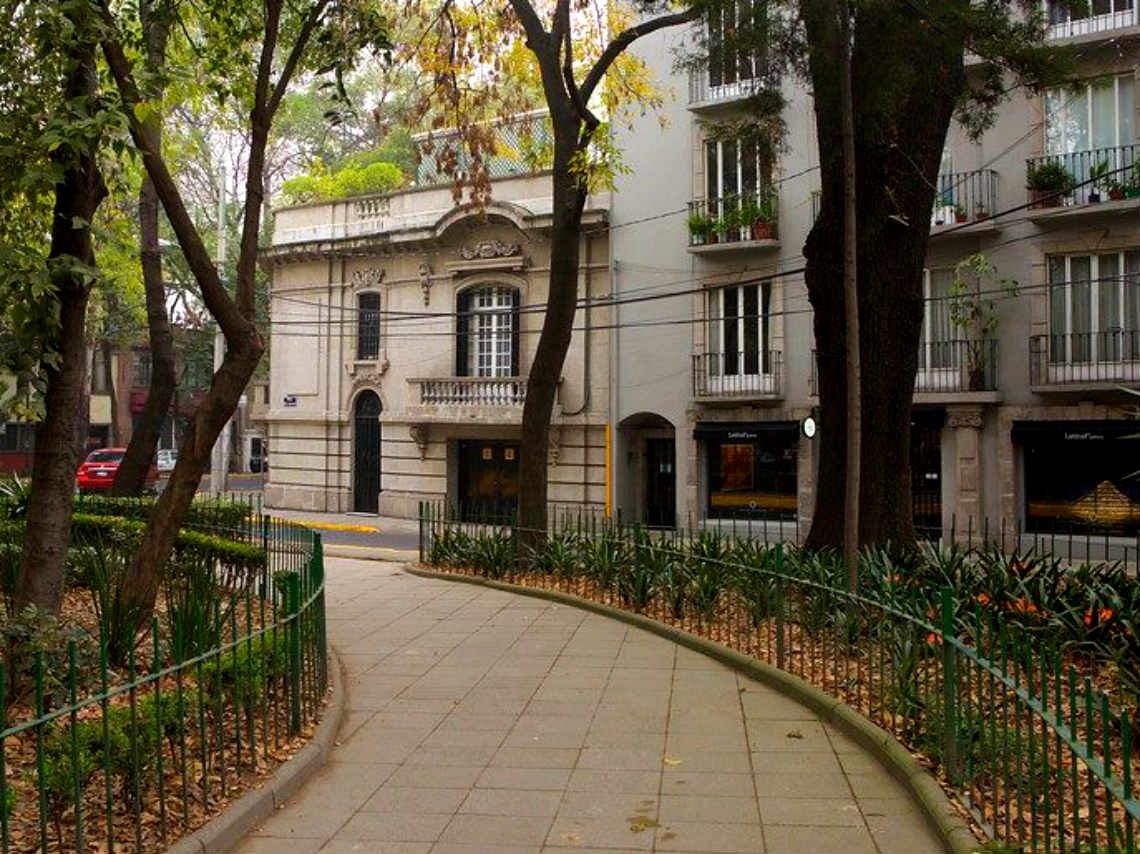
10 must-see places in Roma
1. Rio de Janeiro Square
Start your tour of the Roma in one of the most iconic places of this place. This green space was created in 1903 and was born along with the colony.
In the center of the square there is a fountain with a copy of Michelangelo's David sculpture made of bronze, which was placed in 1976. It is a perfect place to rest and take some good pictures.
2. Castle of the Witches
Next to the Rio de Janeiro Square is this building that owes its name to the particular shape of the roof of the main tower, which resembles a witch's hat, as well as the windows that form a kind of face.
This red brick building is the work of engineer R. A. Piegon and dates from 1908. The art deco details that it now presents were the work of a remodeling in the 1930s, which makes the place a truly beautiful place worth admiring.
3. Álvaro Obregón
This is one of the liveliest avenues in Mexico City: it is full of sculptures in its central pavilion and surrounded by businesses on its sides.
Take time to have a coffee, visit a record store, browse through an old book or eat at one of its restaurants.
4. Poet's House Museum
This space, once the home of poet Ramón López Velarde, houses the writer's library, as well as the libraries of Efraín Huerta and Salvador Novo.
In the house there are a couple of rooms where you can see how Velarde lived the last years of his life and what the homes in this neighborhood were like in the 1920's. You can also get close to the culture because from time to time there are presentations by writers and poets.
5. Romita Square
This is one of the most secret corners of the colony. This small square, which once served as the setting for the film Los olvidados by Luis Buñuel, has a church that dates back to 1530 and was ordered to be built by Fray Pedro de Gante. The tall pine trees that surround it and its fountain are other details that will conquer you in this space.
6.- Museum of the MODO
The Museo del Objeto del Objeto was inaugurated in 2010 with the purpose of giving a place in our memory to all those things that we use on a daily basis and that live in our memories. Its collection has more than 100 thousand objects dating from 1810 to date that tell the history and culture of our society.
The curious fact is that at the entrance of the place you can find dozens of padlocks that were placed by lovers in 2011.
7. Luis Cabrera Square
It was built as a mirror of the Plaza Rio de Janeiro, in fact they are on the same street. This square is surrounded by restaurants and cafes, so people come to walk their dogs, see the large fountain in the center, look at the small sculpture inspired by The Little Prince or see a photo exhibition.
9. Cibeles Fountain
This monument is an exact replica of the Cibeles Fountain in Madrid, which was built as a symbol of brotherhood between the Spanish and Mexican communities in 1980. The sculpture measures more than 12.5 meters and weighs more than 12 tons and is now located in a newly remodeled garden.
10. Church of the Holy Family
This is the first parish church to be built in this neighborhood and is undoubtedly one of its most representative constructions. This eclectic temple, inspired by the neo-Gothic style, began to be built in 1910 and was completed in 1925.
With a beautiful facade, polychromatic stained glass windows with organic designs and vegetal elements and flowers, beautiful chandeliers and beautiful light blue columns, this place is worth visiting and taking some pictures.
What are your favorite places in Colonia Roma?
Related Publications

Find More Places to Stay in CDMX
Polanco
(60)
Condesa
(60)
Santa Fe
(60)
Zona Reforma
(60)
Roma
(60)
Juarez
(60)
1
2
3
© 2026 — KUKUN



© 2026 — KUKUN